Bill Pena
augusti 25, 2001
|
At the estuary of tropical rivers grow the mangrove forests. Sometimes called ”the nursery of the sea”, these ideal brackish waters are a favourite location for hatching and caring for fry; the river is full of nutrition as it flows into the sea, and the mangrove roots provide protection from predators.
|
|

Mangrove trees are unique in being able to live both in fresh- and saltwater. They use osmosis to filter the salt from the seawater, and are easily recognisable by their raised root-systems.
|
|
|
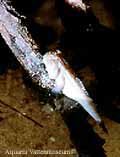
| Mud Skippers (Periopthalmus sp.) prefer to live on land than in water (which is why they are the only fish with eyelids), and ehey recieve oxygen from water carried in special sacs. Their limb-like breast fins enable them to move about on land. (15 cm) |
Archer Fish (Toxotes jaculatrix) catch insects up to several metres above the water’s surface by skooting them down with their built-in water guns.(24 cm)
Puffer Fish (Tetraodon sp.)Their main diet is snails, but they also feed on the fins of other fish. When threatened they puff themselves up to several times their normal size. (18 cm)
Sea Catfish (Arius seemanni)use the nutritious mangrove swamps as nurseries for their young; when adult they move out to live in the sea. (45 cm)
Four-eyes (Anableps anableps) are surface swimmers, living on insects, beetles and other surface organisms. They have, in fact, only two ayes, but each eye is divided by a horizontal partition, which enable them to see simultaneously above and below the surface. (15 cm)
|